
|
|
Dear Friend of the IRR, Imagine if the police regularly searched your home without a warrant, just in case you were doing something illegal. This might make society safer, but are you willing to give up your privacy in exchange for potential safety? As more and more of our lives are being conducted online, we become more vulnerable to bad actors seeking to access our data. From credit card scams to terrorist attacks to predators targeting our children, the potential for harm is real and substantial. To protect people from harm, governments all over the world are drafting and passing laws that effectively allow them to see all people's online activity at any time, without a warrant. What does this mean for us? Are we forced to make a hard, binary choice between ‘harm’ and ‘safety’? Is privacy now a redundant concept? And what are the implications for democratic citizenship and political activism?
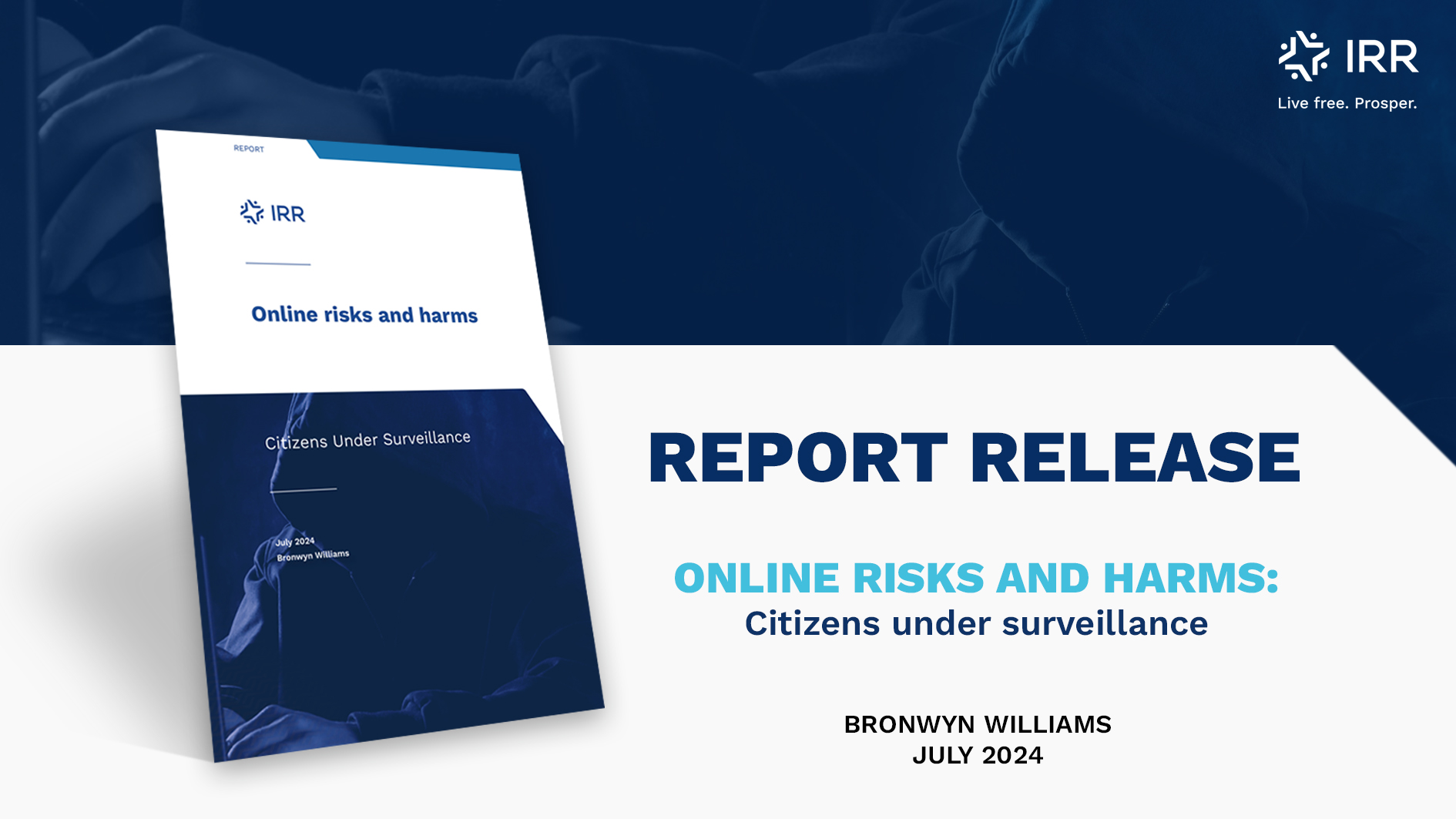
These questions are interrogated in depth in the IRR’s latest report, Online Risks and Harms: Citizens under Surveillance, written by Bronwyn Williams, a futurist and analyst. Focusing on legislative measure taken by other governments, the report presents some urgent warnings for South Africa.
|



|
Become a friend of the IRR
|